
×

Choosing the Right Support for Your Feet

Walking shoes and running shoes are built differently to match specific movement patterns and impact levels. Walking shoes often feature a flexible upper, stable midsole, and durable outsole that supports a smooth heel-to-toe motion. Running shoes typically include enhanced cushioning to absorb repeated impact and a more responsive midsole for forward propulsion. Shoe stability is important in both types, and proper fit should include checking for heel slippage and allowing enough toe room. Wearing the correct footwear may help prevent painful foot conditions like plantar fasciitis. A podiatrist can evaluate gait, recommend proper shoes, and provide custom orthotics. If you are experiencing foot pain after walking or running, it is suggested that you consult a podiatrist who can treat various foot and ankle conditions and guide you on the correct shoes to wear for your desired activity. 

If you are a runner, wearing the right running shoe is essential. For more information, contact Dr. Todd Goldberg from Complete Family Foot Care Center. Our doctor can provide the care you need to keep you pain-free and on your feet.

Choosing the Right Running Shoe for Your Foot Type

To increase performance and avoid the risk of injury, it is important to choose the right running shoe based on your foot type. The general design of running shoes revolves around pronation, which is how the ankle rolls from outside to inside when the foot strikes the ground.

  • Neutral runners are able to choose from a wide variety of shoes, including minimalist shoes or even going barefoot.
  • Runners who overpronate, or experience an over-abundance of ankle rolling, should choose shoes that provide extra motion control and stability.
  • Runners who underpronate, or supinate, have feet that have high arches and lack flexibility, preventing shock absorption. They require shoes with more flexibility and cushion.

If you have any questions, please feel free to contact our office located in Littlestown, PA . We offer the newest diagnostic and treatment technologies for all your foot care needs.
Read more about Choosing the Right Running Shoe

When a Curled Toenail Grows Into the Skin

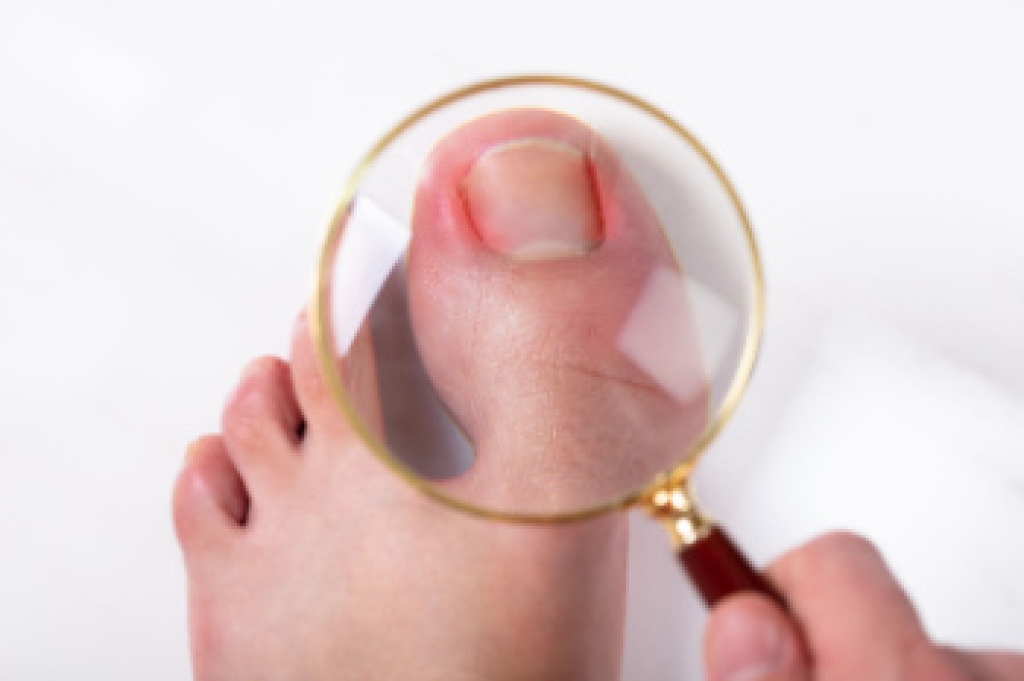
An ingrown toenail develops when the edge of a toenail presses into the surrounding skin instead of growing straight outward. This most often affects the big toe and can quickly become painful. Early signs include redness, swelling, and tenderness along one side of the nail. As the nail continues to push into the skin, the area may become warm and irritated. In some cases, infection develops, leading to drainage or increased swelling. Ingrown toenails can be caused by trimming the nail too short, cutting the corners of the nail, tight shoes that place pressure on the toes, or injury to the nail. Some people also have naturally curved nails that increase the risk. A podiatrist can examine the toe and determine the best way to relieve the pressure. Treatment includes careful nail trimming, protective care, or a small procedure that removes part of the nail to prevent it from growing inward again. If you have an ingrown toenail, it is suggested that you make an appointment with a podiatrist.

Ingrown toenails can become painful if they are not treated properly. For more information about ingrown toenails, contact Dr. Todd Goldberg of Complete Family Foot Care Center. Our doctor can provide the care you need to keep you pain-free and on your feet.

Ingrown Toenails

Ingrown toenails occur when a toenail grows sideways into the bed of the nail, causing pain, swelling, and possibly infection.

Causes

  • Bacterial infections
  • Improper nail cutting such as cutting it too short or not straight across
  • Trauma to the toe, such as stubbing, which causes the nail to grow back irregularly
  • Ill-fitting shoes that bunch the toes too close together
  • Genetic predisposition

Prevention

Wearing proper fitting shoes and using proper cutting techniques will also help decrease your risk of developing ingrown toenails.

Treatment

Ingrown toenails are a very treatable foot condition. In minor cases, soaking the affected area in salt or antibacterial soaps will not only help with the ingrown nail itself, but also help prevent any infections from occurring. In more severe cases, surgery is an option. In either case, speaking to your podiatrist about this condition will help you get a better understanding of specific treatment options that are right for you.

If you have any questions, please feel free to contact our office located in Littlestown, PA . We offer the newest diagnostic and treatment technologies for all your foot care needs.
Read more about Ingrown Toenails

What Causes Plantar Fasciitis?

Plantar fasciitis is the most common cause of heel pain. It occurs when the plantar fascia, a thick band of connective tissue that runs from the heel bone to the ball of the foot, becomes strained or develops small tears. This tissue supports the arch and helps absorb shock when you walk. Repeated stress from standing for long hours, walking on hard surfaces, running, or wearing high heels can overload the fascia. Tight calf muscles, flat feet, or very high arches can also place extra tension on the heel. People who are overweight or who have inflammatory joint conditions may be at higher risk of plantar fasciitis. The main symptom of plantar fasciitis is sharp heel pain when taking the first steps in the morning or after resting. A podiatrist can perform a detailed exam, order imaging tests, and provide advanced treatment to reduce pain and prevent long-term damage. If you have symptoms of plantar fasciitis, it is suggested that you make an appointment with a podiatrist for an exam, diagnosis, and treatment.

Plantar fasciitis can be very painful and inconvenient. If you are experiencing heel pain or symptoms of plantar fasciitis, contact Dr. Todd Goldberg  from Complete Family Foot Care Center. Our doctor can provide the care you need to keep you pain-free and on your feet.

What Is Plantar Fasciitis?

Plantar fasciitis is the inflammation of the thick band of tissue that runs along the bottom of your foot, known as the plantar fascia, and causes mild to severe heel pain.

What Causes Plantar Fasciitis?

  • Excessive running
  • Non-supportive shoes
  • Overpronation
  • Repeated stretching and tearing of the plantar fascia

How Can It Be Treated?

  • Conservative measures – anti-inflammatories, ice packs, stretching exercises, physical therapy, orthotic devices
  • Shockwave therapy – sound waves are sent to the affected area to facilitate healing and are usually used for chronic cases of plantar fasciitis
  • Surgery – usually only used as a last resort when all else fails. The plantar fascia can be surgically detached from the heel

While very treatable, plantar fasciitis is definitely not something that should be ignored. Especially in severe cases, speaking to your doctor right away is highly recommended to avoid complications and severe heel pain. Your podiatrist can work with you to provide the appropriate treatment options tailored to your condition.

If you have any questions, please feel free to contact our office located in Littlestown, PA . We offer the newest diagnostic and treatment technologies for all your foot care needs.

Read more about Plantar Fasciitis

Cuboid Sling Surgery for Midfoot Stability

Cuboid sling surgery is a procedure used to address ongoing pain and instability along the outside of the foot, often involving the cuboid bone. This small bone plays a key role in foot balance and weight transfer during walking. When the cuboid shifts or becomes unstable due to injury, ligament damage, or chronic strain, patients may experience sharp lateral foot pain that does not improve with conservative care. A cuboid sling procedure is designed to stabilize the bone by supporting it with surrounding soft tissue, helping restore proper alignment and reduce abnormal motion. The goal is to improve function, decrease pain, and allow the foot to move more efficiently. Recovery typically includes a period of protection followed by gradual return to activity. If outer foot pain persists despite treatment, it is suggested that you see a podiatrist to determine whether surgical correction is appropriate.

Cuboid syndrome, also known as cuboid subluxation, occurs when the joints and ligaments near the cuboid bone in the foot become torn. If you have cuboid syndrome, consult with Dr. Todd Goldberg from Complete Family Foot Care Center. Our doctor will assess your condition and provide you with quality foot and ankle treatment.

Cuboid syndrome is a common cause of lateral foot pain, which is pain on the outside of the foot. The condition may happen suddenly due to an ankle sprain, or it may develop slowly overtime from repetitive tension through the bone and surrounding structures.

Causes

The most common causes of cuboid syndrome include:

  • Injury – The most common cause of this ailment is an ankle sprain.
  • Repetitive Strain – Tension placed through the peroneus longus muscle from repetitive activities such as jumping and running may cause excessive traction on the bone causing it to sublux.
  • Altered Foot Biomechanics – Most people suffering from cuboid subluxation have flat feet.

Symptoms

A common symptom of cuboid syndrome is pain along the outside of the foot which can be felt in the ankle and toes. This pain may create walking difficulties and may cause those with the condition to walk with a limp.

Diagnosis

Diagnosis of cuboid syndrome is often difficult, and it is often misdiagnosed. X-rays, MRIs and CT scans often fail to properly show the cuboid subluxation. Although there isn’t a specific test used to diagnose cuboid syndrome, your podiatrist will usually check if pain is felt while pressing firmly on the cuboid bone of your foot.

Treatment

Just as the range of causes varies widely, so do treatments. Some more common treatments are ice therapy, rest, exercise, taping, and orthotics.

If you have any questions, please feel free to contact our office located in Littlestown, PA . We offer the newest diagnostic and treatment technologies for all your foot care needs.

Read more about Cuboid Syndrome

Why Live with Pain and Numbness in Your Feet?

Suffering from this type of pain? You may have the foot condition known as Morton's neuroma. Morton's neuroma may develop as a result of ill-fitting footwear and existing foot deformities. We can help.


Connect with us
Like Us Follow Us Review Us Read Our Blogs
Copyright © Complete Family Foot Care Center, P.C | Site Map | Design by: Podiatry Content Connection